Tag Archives: the writing life

Do you DIY?

(names changed to protect the innocent)

Recently, my niece, Holly, made a black cat pinata from scratch for Halloween. Did you read that? A pinata FROM SCRATCH! She didn’t buy it at the Bulk Barn or Party City. She handmade it. What the?!

Of course, she captured and shared the step-by-step magic on Instagram. I marveled at it – her ingenuity, her patience. Hundreds and hundreds of confetti-like squares of black tissue paper individually glued to a perfectly carved cardboard cat frame. Her two seven-year old twin girls proudly helped along the way, gluing on the eyes, preparing the whiskers. Then they reveled in the moment they got to smash it with their friends – scrambling and shrieking for candy.

“Damn,” I thought. “She’s so talented, thoughtful and creative.”

Last June, when my daughter was graduating from high school, her friend’s mom, Leah, printed out pictures from each year of her daughter’s school life, hung them one by one down the hall from her daughter’s bedroom with streamers, so when she woke up that morning, she opened her door to a celebration of her life so far – all leading to a balloon and flower shrine in the living room adorned around her grade 12 graduation photo as her family stood around and cheered.

When my kid told me about it, I’m pretty sure I caught a sense of longing and sadness in her eyes, wishing she had such a mom.

And once again, I thought, “Damn. She’s so talented, thoughtful and creative.”

I tried crafts with my kids as they grew up. Mostly, I bought them kits and paints from Michaels or the Dollar store and let them do their thing. If you’ve seen my past attempts at painting or crafts, you’d understand. I just don’t have the DIY DNA.

But then, after I gave my daughter her graduation present, I realized I was being too hard on myself.

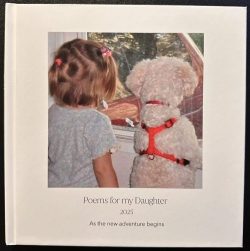
Poems for my daughter
My DIY book cover

I gave her a book of personal poems I had written about her to mark this significant transition in her life out of high school into university. Each piece was inspired by words I had collected about her from loved ones. At my request, they had sent me three words they think of when the think of her. I took them all and wrote some musings in hopes they would encourage, inspire, comfort or even spur a giggle from my youngest.

None of these poems came from a kit at Michaels or the Dollar Store. All of them came from me.

Tears ran down her cheeks as she read the pages. My heart filled.

That’s when I realized writing is my DIY, and damn, I am talented, thoughtful and creative!

I had created similar books for her two older sisters when they graduated. Each with their own twist, and their reactions equally filled my heart.

Over the years, I’ve written random poems and musings for many life moments for people I love: retirements, goodbyes, thoughts for a dying friend, my dad’s 90th birthday. I even did one for National Donut Day once. So fun! I do it because I love it and it means something to me. In turn, I also hope my words might mean something to others too – at the best of times, maybe they even get a laugh. (I’m no joke teller in real life, but sometimes I’m funny on paper 😊)

So, as it turns out, my DIY DNA isn’t half bad and I can hold my own against the likes of Holly and Leah.

Tell us how you DIY your writing and what it means to you.

1 Comment

Filed under Feel good, Inspiration, Life and stuff, Motivation, poetry, Trials and Tribulations

A meditation in three words

I have some big creative plans for 2025.

I’m working on a short story collection, with a goal of drafting one story every month. The Restless Writers are working on a collaborative project – which Beckie mentioned a few months ago – that will have a lot of moving parts and ambitious deadlines. I have a new non-fiction project waiting in the wings, as well as some non-writing related plans too.

I’m excited to work towards my goals, and they’re important to me. But like a lot of the world, I feel like I’m teetering on the edge of chaos. How can I intentionally create space for pursuing my writing when it feels like I’m losing control? How can I keep moving forward when the work feels like I’m swimming through molasses? How can I support my creative and mental health in an already full and hectic life?

What helps me is a three-word mantra: Discipline. Patience. Joy.

Here’s what these words mean to me.

Discipline

I’ve come to accept that, for me, a daily writing habit isn’t realistic. I have a full-time job and do freelance work on the side, so it’s not feasible to find an hour to write every single day. What I can do is plan writing blocks in my weekly schedule when it makes sense for me. Sunday mornings, for example, work very well. Mini-DIY writing retreats are another tool I use. The discipline part kicks in when I commit to those writing blocks or retreats and use my writing time effectively.

(Not a write-every-day person? Feel better about it with the idea of “binge writing,” which I learned from Allison K Williams in this blog post.)

Showing up for other people is another part of my creative discipline. The monthly(ish) Restless Writers meetings are a big part of that. I also offer support to a small circle of people who are working towards creative goals and need the help of an accountability partner. When I show up to co-work with them, I’m also showing up for myself.

Most days, I struggle with focus. And there’s nothing like the fidgets to disrupt one’s creative efforts. So, this year, I’m banning the disruptors – those things that pull me out of creative flow. I’ve deleted TikTok (which I should have done eons ago, honestly). I’ve muted social media notifications. I’ve silenced the siren call of books to be read and jigsaw puzzles to be completed by moving them to a different room. Out of sight, out of temptation, right?

I’ve also taken steps to make it as easy as possible to transition into writing mode. Check out my previous posts about creative readiness (part 1 and part 2) if you want to hear how I’m setting myself up for creative success.

Patience

Where the word discipline feels somewhat sterile and harsh, patience feels like grace.

Creative work takes time, especially if you’re pursuing bigger goals, like a novel. With generative AI all around us, promising instant creative gratification, it can be hard to pull on the reins and settle into a rhythm of doing the time-consuming work. I have to remind myself that my writing goals won’t be achieved in one day – or heck, even in one week – and that’s okay. My slow and bumbling human brain is creating worlds, inventing people, and imagining love and disaster. Isn’t that beautiful?

Patience is also about knowing that my creative work will be there even if I have to step away from it. Life happens, and you might experience things that throw you off your creative game. I’ve had some setbacks already this year. Work got busy early. I had a monster freelance project that never seemed to end. The US election results gave me creeping, swirling, can’t-sleep-at-night anxiety. And last week, I said goodbye to my darling tortoiseshell cat, Mary Piper, who had been my companion for the last 14 years. Today was the first day I’ve felt like getting back to my writing. And you know what? The creative spark and the drive were still there. The story still called to me. So, I poured a coffee, put on some focus music, and got back to it.

This is Mary Piper, and one of her gazillion toys.

Joy

The third facet of my mantra is a gift to my creative self, a way of refilling my well and helping me feel connected to people and beauty around me. Frankly, joy has been hard to come by recently. There’s a lot going on – in my life, in the world – that makes joy seem elusive, like a shy fox in winter, or a sunrise hiding behind the morning fog. It can also be hard to recognize joy when you crash into it.

For me, joy feels like the hum of creative connection, the quiet of being immersed in nature, the exhilaration of moving my body, and the pleasure of interacting with art.

This year, I’m making the experience of joy a proactive exercise.

I’m seeking out and attending events, like an author reading at the library or an Alice in Wonderful exhibit at the Royal Botanical Gardens. I’m waking up early and walking to the frozen and glorious lake. Those books and puzzles I relegated to another room for the sake of discipline? I’m savouring them when I’ve finished my writing for the day. These moments are me welcoming and pursuing joy in my everyday life.

Discipline. Patience. Joy.

I breathe deeply and hold these words in my consciousness as I get ready in the morning. I contemplate them, written on the whiteboard in my study, throughout the day. I whisper them to myself when I get frustrated or depleted or sad. I re-visit them at night, to remind myself that I’m nurturing my creative self in ways that work best for me.

Do you have a mantra or a special word for 2025? I’d love to hear what it is and what it means to you.

Maria

2 Comments

Filed under Life and stuff, Motivation, Trials and Tribulations

Building creative readiness – Part 2: Your creative mindset

In my last post, I talked about the concept of creative readiness and what that means in terms of your physical environment: your writing space, your writing tools and technology, and the things you need around you to be your best creative self.

But your physical environment is only one part of the picture. Your mindset plays a huge role when it comes to being focused, productive, and creative.

For many writers, feeling inspired and “in the mood” to write is the challenge. But as Jack London famously said, “You can’t wait for inspiration. You have to go after it with a club.”

(Actually, he wrote, “Don’t loaf and invite inspiration; light out after it with a club, and if you don’t get it you will nonetheless get something that looks remarkably like it,” which I think is much more poetic.)

This echoes that quote from Ivan Coyote in my previous post, about being “actively engaged in the creative practice.” For them, lighting out after inspiration and creativity involves self-discipline, walks, and hot showers.

As a writer with a day job, I don’t have the luxury of waiting around for my muse to make an appearance. I need her to show up in those 30-minute increments I have cleared out of my day to write. Like, at the snap of my fingers.

Basically, I have to be my own muse, or write without one.

Real picture of me and my Muse collaborating on a story.

Creative readiness, when it comes to mindset, looks like this:

  • maintaining a full creative well that you can draw from;
  • being resilient and able to overcome creative challenges like writer’s block or burnout; and
  • having the skills to step into creative mode when it’s time to write.

I asked the other Restless Writers how they refill their creative wells.

For Beckie, connection nourishes creativity. She builds creative energy by “spending time with other creatives, like my Restless Writers.” In addition to our meetings and retreats, Beckie says that when she needs some help getting creative, she looks up. “The night sky is an inspiration.”

Andrea too finds that connecting with other artists and writers helps. Besides the inspiration she gets from the Restless Writers, she engages with creative works to get her ideas going. She says she will “read a great book. Go to the theatre to see a play or musical. Watch a great actor in a movie.” Andrea has a performance background (plus she’s an amazing trainer and facilitator), so it’s no surprise that theatre, singing, and dance parties with her daughters keep her feeling her creative best.

“Reading a lot of fiction is great,” echoed Sharon. “I get little pieces of inspiration from that—whether it’s from a piece of dialogue or an interesting story choice.”

For me, connecting with the Restless Writers (and other writers and creatives) and pushing myself out of the inertia of routine with challenges makes me feel pumped about writing. Beyond writing, I enjoy making digital art and taking photos of things that strike me as visually interesting. When I’m doing something like building out graphics for social media, I get to engage a different part of my creative brain. There are usually words involved, so the interplay of language and graphic arts intrigues me as well.

Whether or not you believe writer’s block is a thing, the struggle to write well—or even to get started—is something that hits us all at some point. My struggle is usually with writer’s jam. That’s when I have so many projects on the go, I pinball between priorities and can’t make meaningful progress on any of them, so I avoid my writing altogether. It’s brutal. I know focus and monotasking is the way to go, and that’s something I have been working on recently with pomodoros, co-writing sprints, and allowing myself to go as slowly as possible without actually stopping.

Andrea’s approach to tackling writer’s block starts with mindfulness. “I start by just breathing in and releasing tension, and then I free write—what I see/hear/smell, what’s in my head, what’s in my heart, with no judgment. Just words on a page. And I wait for my muse to return. She doesn’t always, and I’m left with captured random thoughts. When she does return, I welcome her in and try to open to the gifts she is offering.”

Sharon addresses writer’s block by switching things up. “In the last few months, I’ve been trying something new where I dictate a first draft of a chapter into my computer or phone. I try to go through it in one go, even if I am tripping over my words. The dialogue is choppy and a lot of the words are misspelled but it helps me get the structure of the chapter down. It takes the pressure off of staring at a blank page.” (I’m definitely going to try this, Sharon!)

Burnout can also affect creative readiness. Beckie says she experiences burnout “usually after completing a large project. Or even in the months prior to completion. It can feel like such a grind to get to the end, while, in reality, there is no end.” She focuses on other creative projects to help with recovery—things like painting, gardening, reading, or astrophotography.

Andrea says she can get “mind burnout,” where she’s overwhelmed and can’t do any kind of work, including writing. When this happens, she says she tries “to take time to ‘not do’ and just be. It could be days, weeks, or months, but my need to create always returns.”

I’ve had this experience too. I can be “away” from my writing for long stretches, but something—a Restless Writers meeting, a prompt, a new idea, a fresh take on an old story, or just the urge to bring something to life on paper—brings me back.

I wish I had a cheat code that I could apply to instantly switch to creative mode when I sit down to write. But I know there is no hack. It comes down to cultivating a regular creative habit, nurturing your creative self, and filling your creative well so you can step into writing mode as easily as possible.

In many ways, writing sets up a self-sustaining feedback loop. The act of writing itself is what kickstarts creativity and keeps the momentum going.

Once you start writing, you are creating the mindset and conditions to…keep writing.

As Beckie told me, “For me, creative readiness generally happens after I start a project and not before.”

Luckily, the Restless Writers support each other in sticking to our writing projects and nurturing our creative abilities. “They cheer me on,” said Andrea. “They offer smaller goals to help motivate me; remind me that my writing matters to them. I am grateful for them and their patience and acceptance.”

Thanks to my restless crew for sharing their thoughts on creative readiness and mindset. It’s been interesting to see how each of us approach our work and keep moving forward.

We’d love to hear from our readers too! What does your creative mindset look like? How do you stay resilient in the face of writer’s block and burnout? What habits help you “light out after inspiration”?

Maria

1 Comment

Filed under Inspiration, Motivation, Trials and Tribulations

Building creative readiness – Part 1: Your physical environment

According to celebrated author and performer Ivan Coyote, “You have to be actively engaged in the creative practice for the creativity to hit you” (Globe & Mail, August 7, 2023). They credit self-disciple, nature walks, and hot showers to their success. Coyote strongly believes that you have to put in the work to be prepared to be creative. That way, you’re ready when inspiration hits.

I think of this as creative readiness – an intentional way of removing any friction between you and your writing practice. It’s an approach that clears out the excuses and signals to your creative muscles that it’s time to write.

Creative readiness has two dimensions: your physical writing environment and your creative mindset. Being prepared to be creative means shoring up both of these dimensions. In practice, creative readiness is a series of individualized actions or processes that mark the transition into writing mode, and a way of preparing yourself mentally to make that transition.

I wondered what other writers thought about creative readiness, so I asked my fellow Restless Writers to weigh in. They had a lot to say – so much in fact, that I’m splitting this blog post into two parts.

In this first part, let’s dig into how the Restless Writers set up their physical environments to work on their creative tasks.

Space to let the words flow

A writer needs space. A place to build worlds, invent characters, concoct plots, converse with their muse, and do battle with their inner critic. Virginia Woolf famously said that women writers needed “a room of one’s own” (literal and metaphorical) in which to write. Ray Bradbury wrote his first novel on a typewriter he rented for ten cents an hour in the basement of UCLA’s Lawrence Clark Powell Library. Edith Wharton wrote from her bed.

I asked AI to create an image of the perfect writer’s office. Here’s the result:

I mean… That looks pretty perfect to me. (The Edison lights and cosy blanket? Love those details!)

In reality, there is no universal “perfect” writing space – it is personal to each writer.

Beckie, a Restless Writer with an enviable backyard, has a dedicated writing shed – but it’s weather-dependent. “Ideally, I write in my writing shed. This works best because there are no distractions, except weather at times when it can get too hot or too chilly. I dream of a mini woodstove in there, with space for a tea pot.” When the shed isn’t an option, she makes do with her dining room table. Beckie is currently editing a memoir.

Cute shed, Beckie!

Andrea has a self-described “backyard oasis” at her home, complete with multiple writing spots and a pool if she needs an active break. Her space is weather-dependent as well. If she’s forced inside, she opts for the living room couch. Wherever she is, she needs a bit of nature. “I look for a spot that is comfortable and full of light; under trees, or where I can see them.”

Staying mobile means Andrea is ready to write when inspiration hits. Sharon, who’s working on a mystery/thriller novel, likes to mix up her writing spots too. “I usually write sitting up in bed against the headboard with my laptop on my lap (obviously) and my notes spread out around me,” she says. “If I’m at the library, I go for the comfiest chair I can find.” Sharon finds sitting at a desk to be too formal.

Like Beckie, I have a writing space all to myself, but it’s also my home office. I have a work-from-home day job, so my 9-to-5 is the same space as my 5-to-9. On the plus side, a dedicated office means I don’t have to fight for space or negotiate with family members for a little quiet time. There’s room enough for my books, writing supplies, files, and two desks. I can close the door and focus on my work whenever I want.

My creative readiness struggle is transitioning from work-Maria to creative-Maria without physically leaving my office. I’ve started to venture out of my formal office and – like Beckie – set up on the dining room table so I can step purposefully into the writing zone.

Technology, talismans, and snacks

The physical writing space includes all the things we need around us to write. That can look different for everyone, but the basic categories are writing implements/technology, writing supports, sustenance, and ambiance.

Sharon gets back to basics when she writes. “I’ve usually got a glass of water beside me on the nightstand and a little bowl of some nibblies – M&Ms, almonds, chips, they all work. I’ve always got the outline for my novel nearby to remind me where I’m headed.”

Andrea’s setup is also pared down: she just needs a notebook and a pen with blue ink, with “candles and calm.”

Beckie is the only RW who mentioned music. She likes to write with “a chill playlist – something ambient.”

As for me, I need my laptop or lined notepaper and a good pen (I write longhand when I’m brainstorming or outlining); my hard-copy story notes and outline; coffee with plenty of milk; and quiet. Those are the absolute must-haves for me to write.

I do appreciate some technological supports. I prefer to keep my phone out of my line of sight, but I do use the timer for writing sprints. Music can get my creativity going, so I sometimes have a classical playlist or an instrumental soundtrack playing. But music with lyrics is too distracting for me. I am experimenting with a talisman – I’m not a woo-woo person but I do believe in the power of rituals. I found a hunk of clear glass on one of my waterfront walks, and I’m placing it near my laptop as a reminder to focus my writing energy.

Making a “creatively ready” writing space

Here’s what I’ve learned about preparing one’s physical space to support a regular writing practice:

  • Identify needs versus wants. While having the perfect physical writing space is every writer’s dream, it won’t be the reality 100% of the time. When it comes down to it, all that any writer needs is a comfortable place to write and the materials you need to be productive and creative. Everything else is gravy. (Like those Edison lights or the soundtrack to Interstellar.)
  • Know yourself. Some writers do their best work at a bustling coffee shop, while others need quiet and privacy to get going. Note where you’ve been productive in the past and do your best to replicate those conditions.
  • Have options. Less-than-ideal conditions can give you a great excuse to skip out of your writing time – like if a heat wave is keeping you from writing in your she-shed, you’re out of M&Ms, or someone stole your favourite seat at Starbuck’s. Have a plan B, even if it’s not ideal.
  • Don’t rely on perfect conditions to write. Waiting for conditions to be just so or spending too much time creating an idyllic space can lead to not doing the work. If there’s anything you should strive for, it’s the ability to build a regular writing habit. I think Sharon said it perfectly: “Don’t overthink creative readiness too much. Have confidence in your ability to be creative at any given time. Most of the time I am just diving blindly into creative projects, knowing that I’ll get where I want to go at some point because I have shown myself many times before that I can.”

Bottom line, creative readiness is about balancing the conditions that help you write at your best with the very minimum you need to put the work in, plus the creative confidence to push on.

In the next part of this post, we’ll talk about the mental and psychological side of creative readiness, and how the Restless Writers get into the writing mindset.

For fun, I asked AI to adjust that image of the perfect writer’s office to include a timed device that would keep a person locked in their chair so they don’t get distracted. The image looks pretty unhinged, but someone should invent this.

Take my money!

Until next time,

Maria

2 Comments

Filed under Motivation

Do you have the COURAGE?

courage-stoneWriting takes courage…

…the courage David had when he met Goliath.

Every time you sit down to write, you face the Goliaths of those who have gone before. The geniuses of Shakespeare, Hemingway, Wilde and Irving (insert any of your literary heroes.) You face the Goliath of the depth of the story you have to tell and the multitudinous words at your fingertips to express it. And you face the Goliath of your fears: Am I talented enough? Do I have anything new to say to the world? Will anyone read this?  What if this only matters to me? And on…

Writing takes courage…

…the courage Rosa Parks had when she refused to give up her seat on that Montgomery, Alabama bus.

When you call yourself a writer you refuse to ignore your soul’s mission for a creative existence. You face possible scorn for going against the rules of world order. You resist the laws of comfort and stability. You have the courage to live an amplified life to bring forth the precious gifts that lie within.

Writing takes courage…

…the courage of Martin Luther King Jr. when he shared his dream openly with the world.

You have courage the day you release your creation into the world where you face possible ridicule or disappointment from those you love and respect. You face possible rejection from publisher after publisher. You face possible anonymity and solitude if your work is out there with no affirmation of its worth, but you have the courage to do it anyway.

You have to be brave to be creative. You have to be daring. You have to be bold. As Jack Gilbert, former poet and teacher, said, “Without bravery, we would never be able to realize the vaulting scope of our own capacities. Without bravery, we would never know the world as richly as it longs to be known. Without bravery, our lives would remain small—far smaller than we probably want our lives to be.”

I am reading Big Magic, by Elizabeth Gilbert, and I am moved and inspired by every word as she describes her creative process in a deeply personal, yet practical and humourous way. She opens by talking about Jack Gilbert, who never made great fortune and fame from his poetry (although he could have). He would ask his writing students, “Do you have the courage to bring forth this work? The treasures that are hidden inside you are hoping you will say yes.”

Discovering your treasures, accepting them, and then boldly bringing them into the light for all to see are all acts of courage. Acts of courage the world needs from you.

Find your inner David, your Rosa, your Martin, and say yes…please.

6 Comments

Filed under Inspiration, Life and stuff, Trials and Tribulations

The Sky is Not the Limit

Image

Photograph by: FRED CHARTRAND , THE CANADIAN PRESS

Chris Hadfield is just plain cool.

Last week I had the pleasure of seeing Commander Hadfield, Canada’s most earthy space ambassador and author of An Astronaut’s Guide to Life on Earth. His presentation resembled a TED talk, it was both inspiring and motivating, and wait for it—out of this world.

The thing that struck me the most is that he started dreaming what he describes as an “impossible dream” from the age of nine. Canada did not have a space program at the time, yet, he was determined to become an Astronaut. This meant preparing very early, advancing his education, learning to fly, learning to speak several languages, and learning to play guitar (now a terrestrial superstar by crooning David Bowie’s Space Oddity). He did these things and showed us ordinary earthlings that dreams do matter, even if only a slim possibility of manifestation, it can and will happen with dedication, preparation and patience.

There are days when I think finishing my current novel is an impossible dream. But I’m half-way there, I’m resuming momentum and receiving encouragement from my fellow Restless Writers. I can do this! And I will, because I am the commander of my writing career. I am dedicated, prepared, and ever so patient in the wonderful world of literary longings. My dream of becoming a novelist is too important to remain unlived. Sure, the odds are stacked against me. But I’m still going for it!

Thanks to extraordinary people like Chris Hadfield, who not only make us proud to be Canadian but who also show us how to make the impossible a reality.

2 Comments

Filed under Author events, Books and stuff, Getting published, Inspiration

A picture paints a thousand words: how to use Pinterest as a writer

pinterest-catsThe last thing I want as a writer is another social networking platform to worry about. I have enough distractions, thank you very much. And so it begins…

With a little persuasion from Maria, I have started “Pinning.” I’m using Pinterest for my writing research. Sure, I’m creating personalized boards and pinning my favourite DIY ideas but I’m also pinning research visuals and catching on to why this popular online space might just be a useful resource for me as a writer.

Unlike most social media platforms, Pinterest is all about the imagery, and not the text. And who doesn’t love pictures! With its visual focus, it may seem counterintuitive that Pinterest would be great for writers, but I’m quickly learning how this tactic is proving to be a rich resource, particularly in the creative stages.

Creating visual pin boards can be a great way to help fuel your imagination and give readers a glimpse into your creative process. Here’s a glimpse at my board to give you an idea.

Now it’s your turn to “Pin It!”

Here are 8 ways that Pinterest can be useful to you as a writer.

1. Research. People (actors that represent your characters). Places (images of similar settings). Things (objects or time period references). Mood (scenes that create atmosphere and emotional overtones).

2. Motivation. Inspirational quotes and wisdom as a way to inspire and remind yourself why you write and what you want to accomplish.

3. Collaboration. Invite other writers to pin to your board and make comments. Organize writing teams and pitch ideas. Provide incentives (free books) to fellow writers.

4. Booklists. Market research and comparables to your book. Or books you want to read!

pinterest2

5. Promotion. Images of your blog, posters, flyers, business cards, book covers, and book tour photos.

6. The Writing Life. Pin the view out the window from your desk. Your bookshelf. Your real-life storyboard/pin board. Or even your cat asleep on your laptop.

7. Stay current. Using the “Popular” feature on the Pinterest home page, you can instantly access the latest trends from all genres.

8. Connect with your fans. Pin boards show your personality and interests. It’s a great way to connect with others and express what you care about.

How do you use Pinterest? Feel free to share links to your pin boards in the comment section. We’d love to check them out!

B Jas

5 Comments

Filed under Blogging, Inspiration, Motivation, Writing ideas, Writing resources

You Think Querying is Tough???

LD

5 Comments

Filed under Getting published, Trials and Tribulations

Agent aficionado

Pinch me, please. I have an agent!

After many months of queries and pitches, it happened. I received an offer of representation. And not just for one manuscript, but for three of them: a middle-grade novel, a children’s picture book, and a non-fictional proposal. My head is still spinning. Spin, spin, sugar!

Prior to the offer, I received plenty of the standard rejection responses, with the usual one-liner pass. Then I started to receive referrals to ‘other’ agents, invitations to query ‘other’ manuscripts, and even personalized feedback—still in the form of rejection; however, it was some of the nicest, kindest, rejection yet. And for me as a writer, this was truly encouraging. In speaking with these agents by email and phone, I learned that my submission was one of value, even if additional work was required to make it shine.

Then I met Kathy LaVergne of Word|Link USA—and the rest was simple. I said “yes” to her offer of representation and signed, sealed, and mailed the agreement!

I’m thrilled to bits to be represented by Word|Link. In the short time I have worked with Kathy, she has been incredibly kind, supportive, and quick—with all three manuscripts currently on submission, and editor’s comments surfacing in my in-box. I’m fantastically fortunate to be working with an agency that, according to Publisher’s Marketplace is one of the top 20 dealmakers in the United States.

My hubby, the analogy-king, sums it all up like this: “It’s like you’re Danica Patrick, you have a car, but now you’ve gotta go to the races.” He’s right, I’m in the driver’s seat and I’m on my way,  über excited, as I enter this next chapter in my writing life—one step closer to publication.

And I must must must extend a gargantuan thank you to my readers (friends, family, beta testers), and especially my critique group and fellow Restless Writers, for helping me get my manuscript to a level worthy of submission.

Having an agent still means more waiting, more finger-crossing, more cringing, and of course more rejection. But I am stoked. Bring it on!

BJ

15 Comments

Filed under Getting published, Success stories

Music to write by

Like writing, music is a big part of my life. I am married to a musician, and that means plenty of song, heaps of sound, and loads of (real) rock band. I have consequently become a “drummer-in-training” for accompaniment purposes. Yes, my (writing) life is a melodious one.

When it comes to writing, there is always music playing in the background (in some form or another), and I’d probably be lost without it. As I write this, I am listening to Arcade Fire (The Suburbs), their “sprawling but intimate new album.” Some other faves from the soundtrack to my writing life, are: MGMT, WeezerThe Cardigans, and (forgive me for this), Vinyl 95.3.

According to research from the University of California, listening to music creates new neural pathways in our brains that stimulate creativity. Music can train the brain for higher forms of thinking (bonus!). For me, music definitely inspires and sets a mood. It can also unleash writer’s block, relax the brain, jump-start a session, and infuse fiction with rich emotion. Music might just be my perfect muse.

How to use music as part of your writing practice:

  • Claim a starting song: Okay, this is vaguely similar to Pavlov’s famous experiments with dogs. Sound the bell. Play your song—every time you sit down to write. Consider Aerosmith’s Back In The Saddle Again.
  • Reflect the time period: Connect with your characters in every way possible. Are you chronicling the 1980s disco period? If so, you should, like, totally fill your writing brain with M-a-d-o-n-n-a.
  • Set the mood: Play music that reflects what you’re writing. If it’s action, how about some Smashing Pumpkins, Muse, or even Guiseppe Verdi’s, Stiffelio.
  • Keep it light: If this is all too much for you, give Mozart or Vivaldi a try for background music. Higher brain function will be yours.
  • Silence is golden: Use your starting song to get going, and then turn it off.

I. Love. Music. I am always surprised how quickly my brain responds to music. Give it a try. Do it often and be consistent; consistency is, after all, the age-old practice of successful writers.

What is YOUR music to write by?

Bjas

8 Comments

Filed under Inspiration, Life and stuff, Motivation